Connected TV
Full screen video inside streaming apps on smart TVs, bought by area rather than by person.
Omnichannel campaigns
Plan once and reach people on connected TV, desktop and mobile, with one budget, one audience and one report.
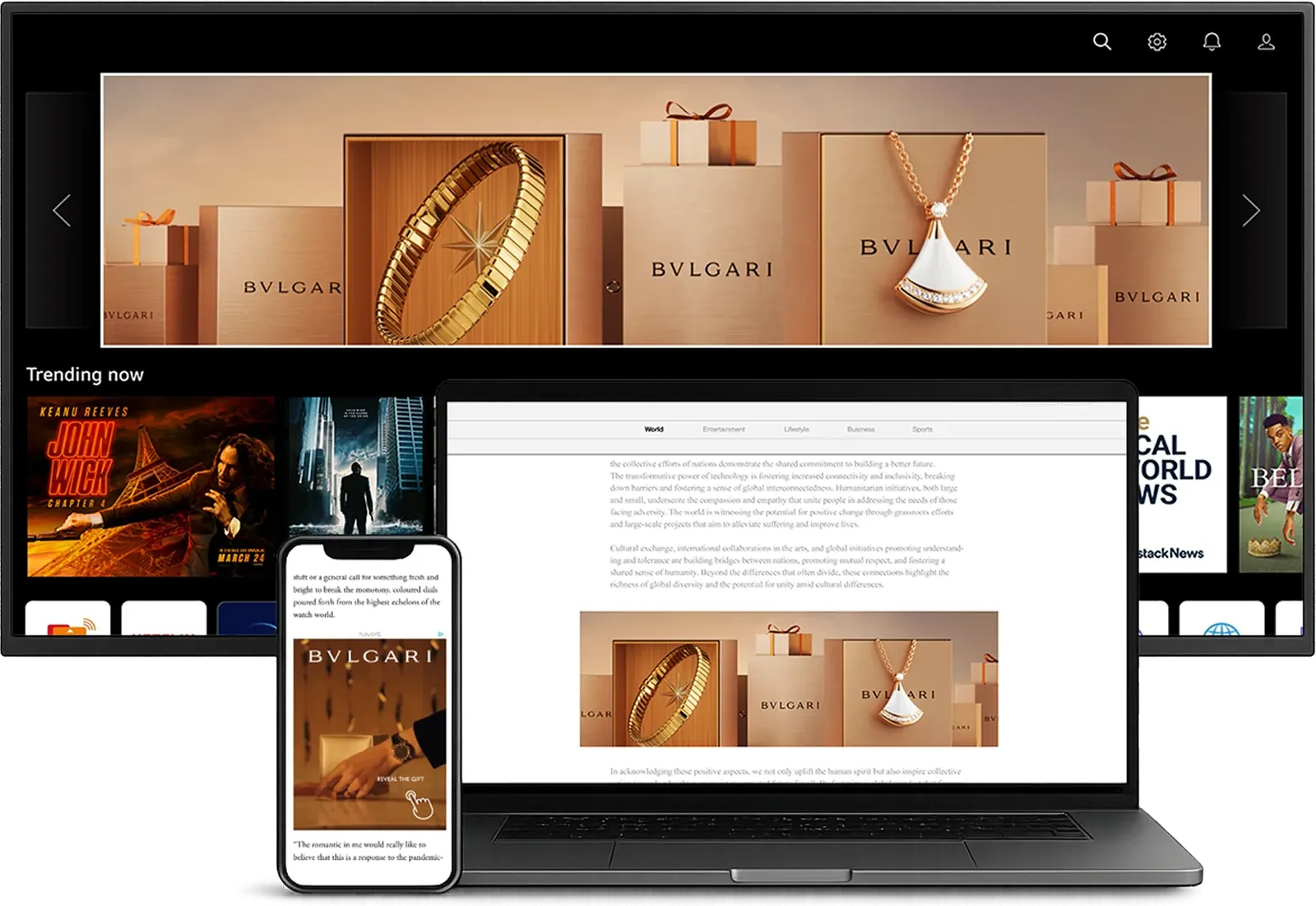
Three screens, one plan.
Full screen video inside streaming apps on smart TVs, bought by area rather than by person.
Banners, native and video on the sites people read during the day.
Banners and full screen units inside the apps people open between everything else.
One audience definition applied to all three, instead of three separate guesses.
What changes when the three stop competing.
Shift money between television, web and phones as numbers come in, instead of renegotiating three deals.
Limit how often one household sees you across the three, so you build recognition instead of annoyance.
Delivery and results for all three in one place, so you can see which screen did the work.
One set of creatives, one approval, live on every screen at once.
Most brands start with web and phones, then add television once the first two are working.
One person, one week, three screens.
A full screen spot while the family is watching, which is what people remember the next day.
A banner on a news or review site while they are reading, carrying the same message.
A short video or banner inside an app, this time with the offer and a reason to act.
Their own products shown again, so the visit turns into a sale rather than a maybe.
What advertisers ask us before running all three together.
A video and a set of banners is enough to start. If you only have one, our team can help cover the gaps.
Yes. Most brands start with web and phones, then add television once the first two are working.
Caps are set per campaign and applied across the formats in it, so a household is not shown the same spot again and again.
Yes. Each one can have its own budget and its own end date, and you can move money between them at any time.
Send us your goal and your markets and we will map the first omnichannel plan with you.